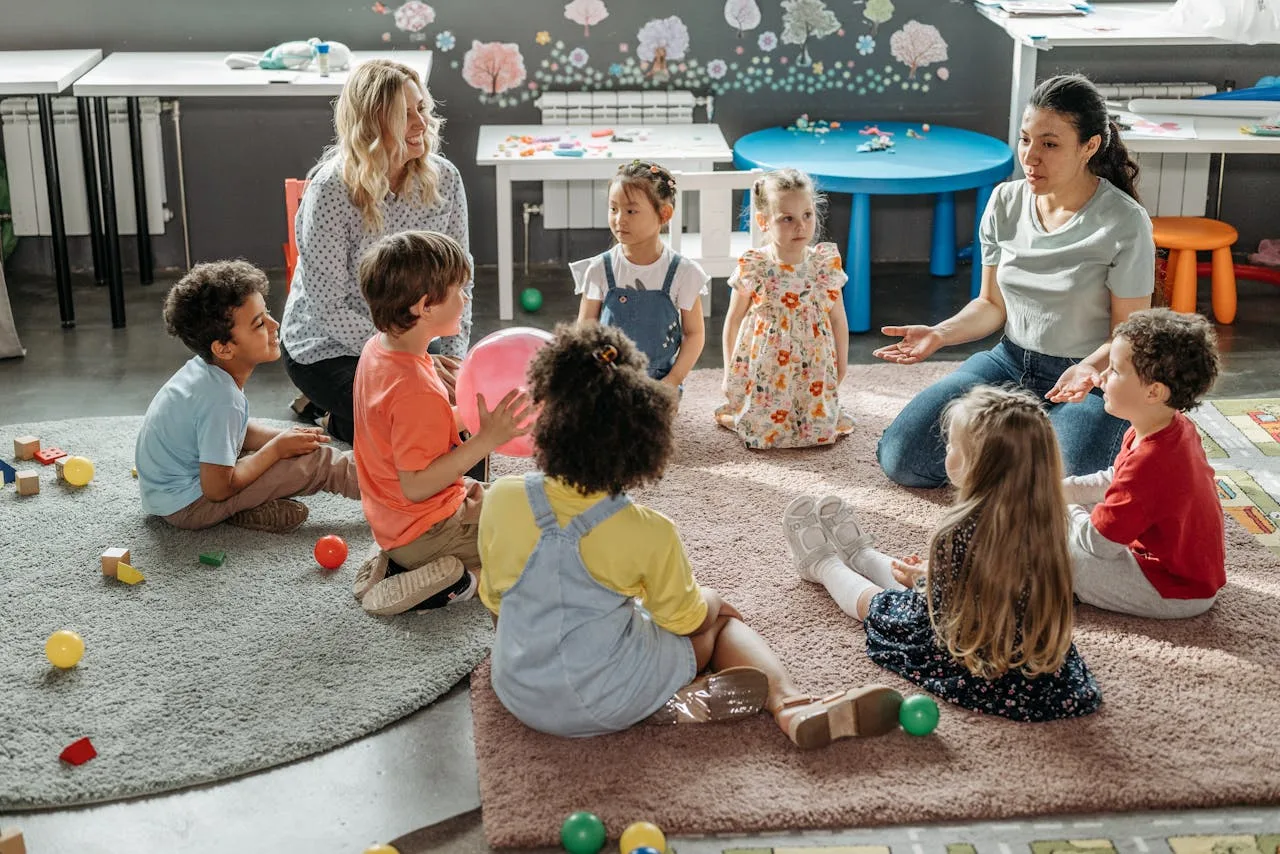

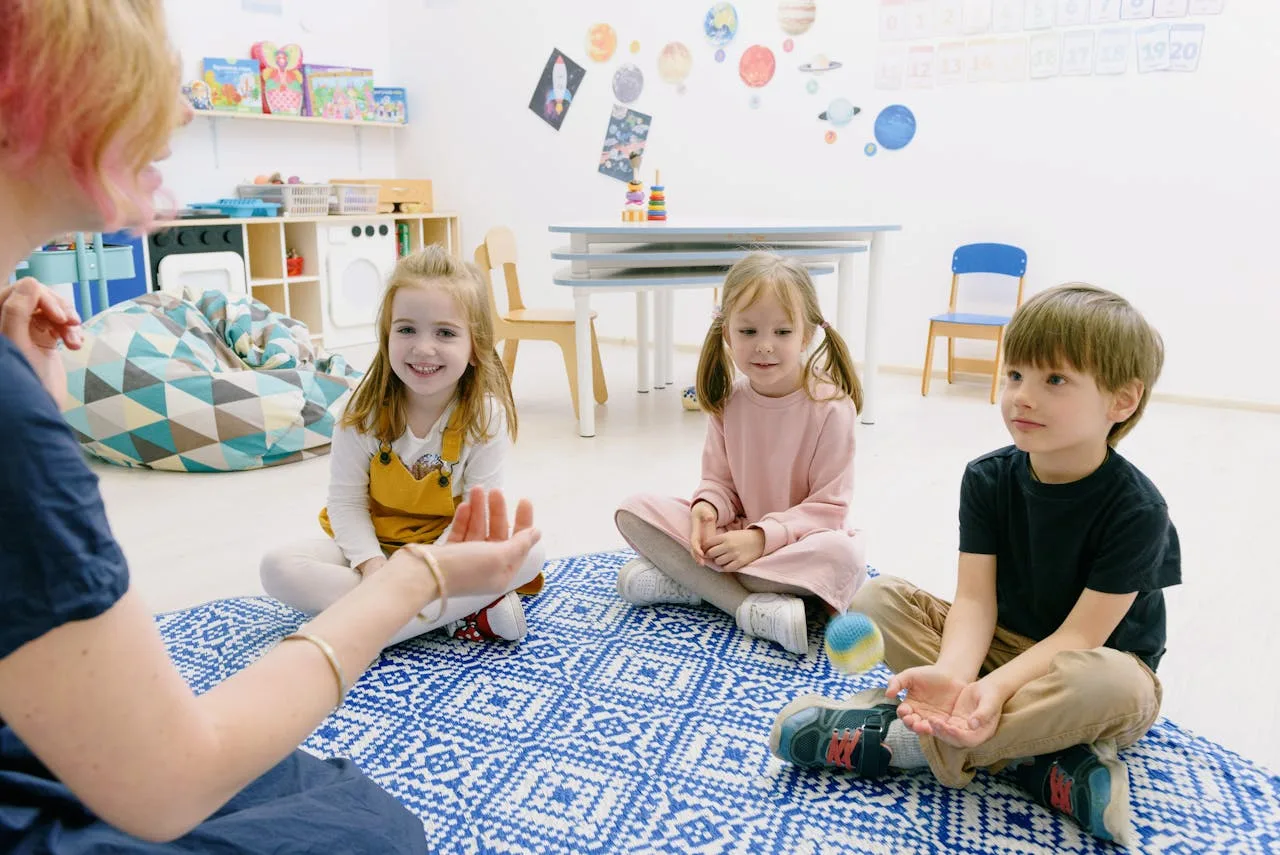
“Kindy” and “daycare” get used interchangeably in everyday Tauranga conversations — but in New Zealand’s early childhood system they mean quite different things. Understanding the difference matters, because it affects hours, fees, age range, philosophy, and whether the 20 Free ECE Hours applies.
This is a plain-English explainer for Tauranga parents choosing between the two. No jargon, no spin — just the actual differences under current (2026) NZ rules.
Key Takeaways
• Both daycare centres and kindergartens are Ministry of Education licensed, and both follow Te Whāriki, NZ’s national ECE curriculum.
• The biggest practical differences are hours, age range, and culture — not curriculum quality.
• Tauranga has multiple options of each type. 20 Free ECE Hours applies at both for ages 3–5.
What is a kindy (kindergarten) in New Zealand?
Kindergartens in New Zealand have a proud 100+ year history — they’re often run by community-based kindergarten associations and traditionally focus on the 3–5 age group. The classic kindy model had morning or afternoon sessions (say 8:45am–12:45pm), staffed entirely by registered ECE teachers, and emphasised child-led play.
In 2026, the picture is more varied. Many Tauranga kindergartens have extended their hours to serve working families — some now offer full-day sessions from 8:30am to 4:30pm. But the core DNA remains: registered-teacher-led, 3–5 focus, community-trust ownership, and a strong whakapapa in the local suburb.
What is a daycare (education and care centre) in New Zealand?
“Daycare” in NZ is shorthand for education and care services — the Ministry of Education’s technical term for long-hours centres that typically operate from around 7:30am to 5:30pm. They accept children from infancy (as young as three months) through to school age.
Unlike traditional kindergartens, daycares run all-day sessions that align with working parents’ schedules. They still follow Te Whāriki and have the same licensing requirements, but the culture tends to be more like an extended family home — infants sleeping, toddlers exploring, and preschoolers learning alongside each other (often in separate rooms).
Kindy vs daycare — the key differences in Tauranga
Here’s a practical side-by-side for Tauranga parents:
- Hours — Kindy: often 8:30am–4:30pm (varies widely). Daycare: typically 7:30am–5:30pm.
- Age range — Kindy: most 2+ or 3+. Daycare: 0–5 (infants welcome).
- Teacher qualifications — Kindy: all teachers registered. Daycare: Ministry minimum 50% registered, many centres run higher.
- Fees under 3 — Kindy: most don’t take under-3s. Daycare: weekly fees (typically $300–$450 for full-time).
- Fees over 3 — Both eligible for 20 Free ECE Hours; some daycares top up to 30.
- Ownership — Kindy: community trust or association. Daycare: private, franchise, or community.
- Culture — Kindy: community-driven, parent-involved. Daycare: varies — small family-run centres to larger franchises.
Neither is automatically better. The right choice depends on your child’s age, your working hours, your budget, and what feels right on tour.
Which is better — kindy or daycare?
This is the wrong question. A well-run daycare can be every bit as rich and nurturing as the best kindergarten. And a mediocre kindergarten can be less engaging than an average daycare. Quality varies more within each category than between them.
The better question is: which option fits your family’s current reality?
If both parents work 8:30–5:00 jobs and your baby is 8 months old, a daycare is usually the practical option — kindergartens rarely take infants and rarely cover full working hours. If your child is four, you work part-time, and you love the idea of community-driven play-based learning, a traditional kindergarten may suit beautifully.
Many Tauranga families also do both across a child’s early years: daycare from infancy through toddler years, then a transition to kindergarten or preschool-focused setting for the final year before school. That’s a perfectly valid pattern.
What about “preschool” — is that another thing?
Yes and no. “Preschool” isn’t a separate MoE licence category in New Zealand — it’s used informally by both daycares and kindergartens to describe the programme for 3–5 year olds. You’ll see “[Centre name] Preschool” as a brand across both types of service.
Our centre The Children’s Garden Preschool & Childcare runs both — our 64 Victory Street centre is a daycare for babies and toddlers, and our 4 Pamir Place centre operates as a preschool-focused daycare for 3–5s.
What every Tauranga parent should check regardless of type
Kindy or daycare, the non-negotiable quality markers are the same:
- Current MoE licence — every licensed service is listed at ero.govt.nz. Never enrol at an unlicensed service.
- Recent ERO report — ideally within the last 3 years, and positively rated.
- Registered teachers — ask what percentage of the team holds a current NZ Teaching Council practising certificate.
- Ratios — better than the minimum (1:5 under-2, 1:10 over-2) where possible.
- Te Whāriki in practice — does the centre plan around children’s interests, and can they show you a learning story?
- Cultural responsiveness — how is te reo Māori and tikanga Māori woven into daily life?
If you want to go deeper, we’ve put together a 12-question tour checklist you can take to any Tauranga centre — kindy or daycare.
Funding — does the 20 Free ECE Hours work at both?
Yes. The 20 Free ECE Hours (introduced by the Ministry of Education and available from a child’s third birthday) applies at virtually every licensed Tauranga ECE service — kindergartens, daycares, home-based, kōhanga reo. Most services pass the funding directly through to reduce your weekly fee for over-3s.
Some centres — including ours at The Children’s Garden — contribute additional free hours on top of the 20. This effectively means families with preschoolers pay no fees for the first 30 hours per week. See our funded-hours policy for details.
Kindergarten in Welcome Bay vs Tauranga central
Geography matters for ECE. A 5-minute daycare run beats a 25-minute commute every single morning — with a toddler, this is the difference between a good start to the day and a crying start to the day.
Welcome Bay specifically has good local options, as do Pāpāmoa, Mount Maunganui, Bellevue, Ōtūmoetai, and Greerton. If you’re comparing across suburbs, factor in:
- Commute time — add 15 minutes for drop-off plus pickup vs a local choice
- Proximity to the school your child will attend — transition partnerships matter
- Parking and pickup flow — some central Tauranga centres struggle with peak-hour access
The best centre is often the second-best centre that happens to be 4 minutes from your house.
Frequently Asked Questions
Can my child go to both kindy and daycare in Tauranga?
Technically yes, and some families do split sessions — kindy in the morning, daycare in the afternoon, for example. Practically, this can be unsettling for under-5s who thrive on routine and consistent attachment figures. Most ECE educators in Tauranga recommend a single primary service unless your work schedule genuinely requires it.
Is a kindy cheaper than a daycare in Tauranga?
For children aged 3–5, both are largely covered by the 20 Free ECE Hours. Traditional kindergartens often have slightly lower supplementary fees and sometimes no optional-hour fees at all. Daycares typically charge weekly fees on top of the 20 free hours. For under-3s, daycare is almost always the only licensed option — kindies rarely take this age group.
Do kindergartens follow Te Whāriki like daycares?
Yes. Every licensed ECE service in New Zealand — kindergartens, daycares, home-based, and kōhanga reo — must deliver Te Whāriki, the national early childhood curriculum. How each centre lives the curriculum in practice varies, so ask for specific examples of how your child’s interests would be planned for.
What age is best for kindy or daycare in Tauranga?
Daycare is appropriate from any age after three months, depending on family need and the child’s readiness. Traditional kindergartens typically start from age 3 or 3.5. Many Tauranga families use daycare in the baby and toddler years, then transition to a preschool-focused programme (daycare or kindy) for the final 12–18 months before school.
How do I know if a Tauranga kindy or daycare is any good?
Check the ERO report, tour the centre during a real session, meet the specific teachers who’d care for your child, ask about ratios and teacher continuity, and trust your instincts. A warm, calm environment with genuinely engaged teachers matters more than the brand or type.
Visit our Tauranga preschool and daycare
At The Children’s Garden we run two centres in Welcome Bay — one for infants and toddlers at 64 Victory Street, and a preschool-focused centre at 4 Pamir Place. You’re welcome to tour either (or both). Book a visit or start your enrolment here.